The USGA’s Historic Decision on Golf Ball Distance
In a move that is set to reshape the landscape of professional and amateur golf, the United States Golf Association (USGA), in collaboration with the R&A, has officially announced a significant rollback on the distance golf balls can travel. This decision, which concludes a long-running debate within the sport, is aimed at curtailing the ever-increasing hitting distances that have become a dominant aspect of modern golf.
The Technical Details
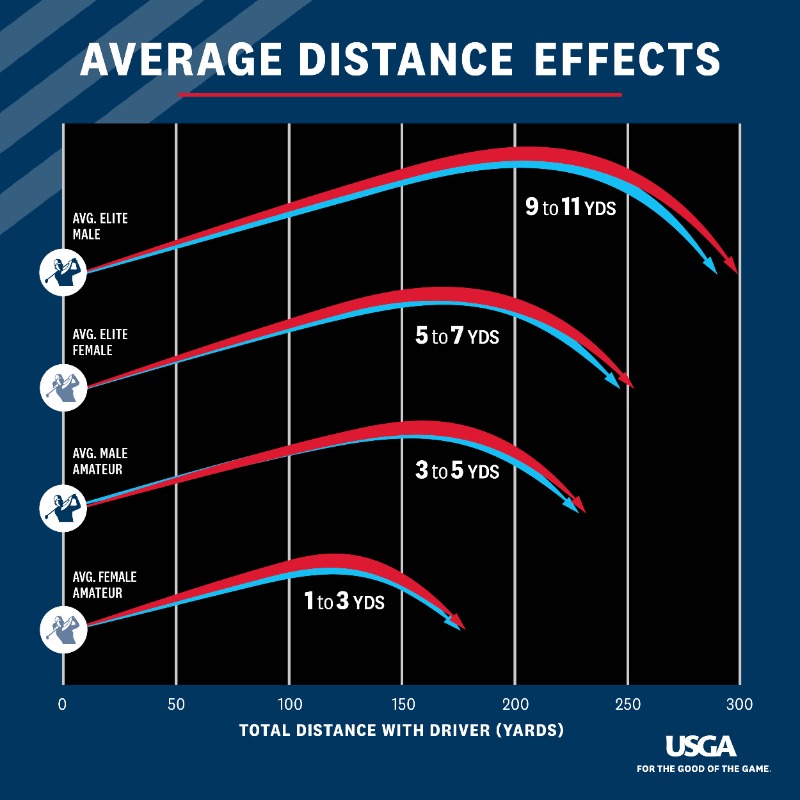
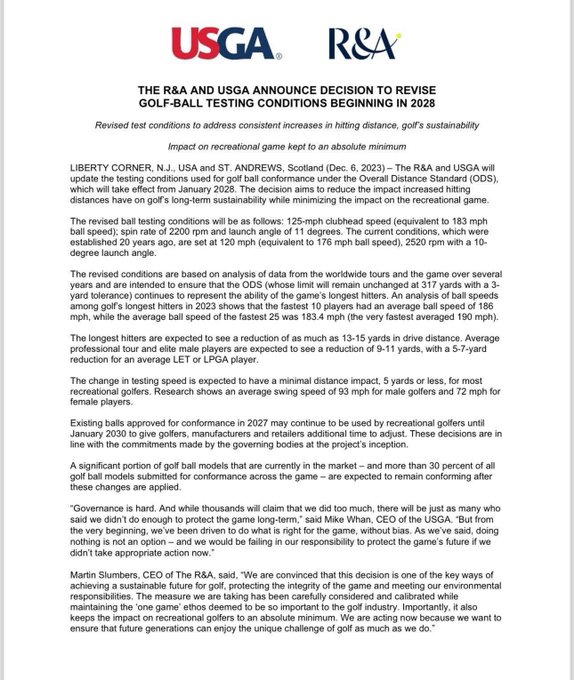
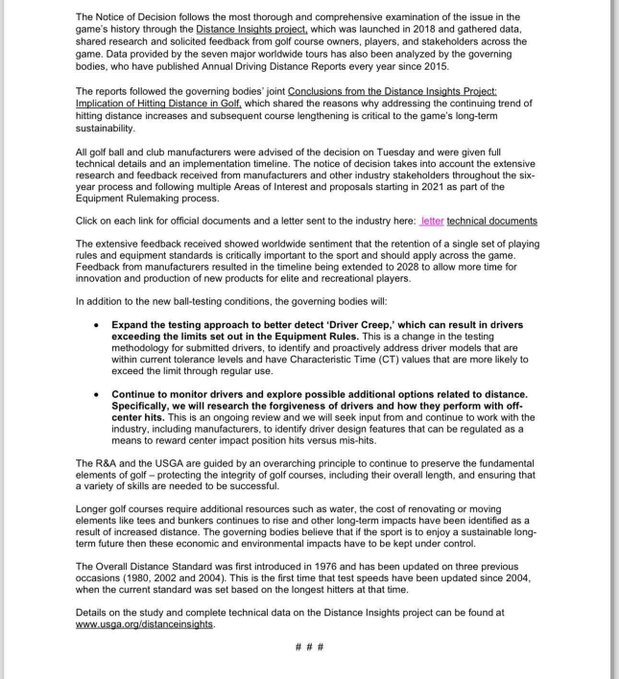
The rollback involves changing the standards by which golf balls are manufactured and tested. Under the new guidelines, golf balls struck at a robot-controlled swing speed of 125 mph must not exceed 317 yards to conform, a bump from the previous speed of 120 mph. This change is expected to reduce the distance for the game’s longest hitters by about 15 yards, bringing the sport back to distance levels seen in the late 1990s. The average driving distance on the PGA Tour, currently around 300 yards, will see a 5% reduction as a result.
The Rationale Behind the Decision
The decision stems from the concern that increased hitting distances have been altering the fundamental challenges and character of golf courses. For instance, the R&A’s Annual Distance Report highlighted that hitting distances have increased by about one yard per year over the last two decades. This trend has led to significant modifications of historic golf courses, such as Augusta National, which spent around $25 million to lengthen its iconic par-5 13th hole, to maintain their original design challenges.
Implications for Golfers
Initially, there were proposals for bifurcation – having different equipment standards for professionals and amateurs. However, this approach has been set aside. Now, all golfers, regardless of their status, will use the shorter ball. This universal application means that the average golfer can expect a reduction in driving distance by approximately 5%. For example, a typical 250-yard drive might be reduced by around 12 yards.
Timeline for Implementation
The new ruling is scheduled to take full effect in 2030, with a transitional period starting in 2028, during which only professionals will use the shorter ball. This phased approach is designed to allow the golfing community to adjust to the new standards.
Mixed Reactions Within the Golf Community
The PGA Tour has expressed its reluctance to support the proposed modifications. PGA Tour Commissioner Jay Monahan communicated that while there was some support for the proposals, the majority opinion was that the Model Local Rule (MLR) was not in the best interest of the game.
Prominent players have taken differing stances. Rory McIlroy has defended the rollback, stating that it would not significantly impact the average golfer and would restore certain skills in the professional game. In contrast, commentator Brandel Chamblee argues that the rule change would primarily disadvantage recreational golfers, as it would penalize them for the abilities of a few top professionals.
Tiger Woods, a 15-time Major winner, has been a proponent of bifurcation, similar to the distinctions seen in professional and amateur baseball. He believes that professionals and amateurs should use different types of golf balls suited to their respective levels of play.
This historic decision by the USGA and R&A marks a significant shift in the sport of golf, aiming to preserve the traditional challenges of golf courses and maintain a balance between technological advances and the inherent skills of the game. The reactions and adaptations to this change will be closely watched by the golfing community worldwide.
 THREE OFF THE TEE
Leave a comment